
Fine Art Insurance
Call Us: 603-766-3733
A single painting can represent more wealth than most people carry in their entire investment portfolio. And yet, many collectors insure their art the same way they insure a living room sofa: lumped under a standard homeowners policy with vague replacement cost language and a prayer. That approach works until a pipe bursts in your gallery room, a crate gets dropped during an international move, or a piece comes back from a museum loan with a six-inch scratch. Fine art insurance built for private collections is designed to cover worldwide transit, newly acquired works, loan-out scenarios, and restoration costs through carriers like Chubb, PURE, Berkley One, and Cincinnati. The global art market reached an estimated $59.6 billion in sales in 2025, a 4% year-on-year increase, which means more high-value pieces are changing hands, crossing borders, and sitting in private homes than ever before. Getting the coverage right isn’t optional: it’s the difference between a recoverable setback and a catastrophic financial loss.
The Fundamentals of High-Value Fine Art Insurance
Protecting a private collection starts with understanding how policies are actually structured. Standard homeowners coverage typically caps personal property at 50-70% of your dwelling limit, and sub-limits for fine art often top out at $5,000 to $10,000 per item. That’s barely enough to cover a limited-edition print, let alone an original oil painting or a bronze sculpture. Dedicated fine art policies operate on entirely different terms, and the structural choices you make at the outset determine whether you’re truly protected or just carrying an expensive illusion of security.
Distinguishing Scheduled vs. Blanket Coverage
Scheduled coverage means each piece is individually listed on the policy with its own appraised value. A $200,000 Basquiat lithograph, a $45,000 Calder mobile, a $12,000 ceramic by Lucie Rie: each gets its own line item. This approach gives you certainty. If that Basquiat is destroyed, you typically know exactly what the insurer owes.
Blanket coverage, by contrast, provides a single aggregate limit for an entire collection. You might carry $500,000 in blanket coverage for 30 pieces without listing each one individually. The advantage is flexibility: you don’t need to update the policy every time you buy or sell a work. The catch is that a single high-value loss could consume a disproportionate share of your blanket limit.
Most experienced advisors recommend a hybrid approach. Schedule your most valuable pieces individually and blanket the rest. Agencies like Avery Insurance, which has spent over 125 years building tailored portfolios for high-net-worth families, typically structure programs this way to balance precision with convenience.
The Importance of Agreed Value and Valuation Clauses
The agreed value clause is the single most important feature in any fine art policy. Under agreed value, you and the insurer settle on a specific dollar amount for each scheduled piece at the time the policy is written. If a total loss occurs, that’s typically what you receive: no depreciation, no market debate, no adjuster second-guessing what your Rothko study is “really” worth.
Compare this to actual cash value or replacement cost provisions common in standard homeowners policies. Those methods invite disputes. A replacement cost approach might reimburse what it costs to buy a “comparable” work, but art isn’t fungible. There’s no comparable replacement for a specific painting by a specific artist from a specific period.
Appraisals should be updated every two to three years, or more frequently for artists whose market is moving quickly. Outdated appraisals are one of the most common mistakes collectors make: they insure a piece at its 2018 value while the market has doubled.

By: Tod O’Dowd, CIC, CAPI
President of Avery Insurance Agency
Global Protection and Transit Risks
Worldwide Coverage for Mobile Collections
Serious collectors don’t keep everything in one place. Pieces rotate between primary residences, vacation homes, storage facilities, and exhibition spaces. A policy with worldwide coverage may follow the art wherever it goes, whether it’s hanging in your Aspen ski house or temporarily displayed at a friend’s estate in the south of France.
Not all worldwide coverage is created equal, though. Some policies restrict coverage to specific named locations. Others may provide true “wall-to-wall” protection that covers a piece from the moment it leaves one location until it’s safely installed at the next. Pay close attention to whether your policy includes coverage while art is in transit, in temporary storage, or at unnamed locations. A piece sitting in a climate-controlled warehouse between homes is just as vulnerable as one hanging over a fireplace.
Protecting Art During International Transit and Installation
International shipping is where things get genuinely dangerous. Temperature fluctuations in cargo holds, rough handling at customs checkpoints, vibration damage during air transport: the risks multiply the moment a piece leaves your wall. Fine art transit insurance should ideally cover door-to-door, including packing, loading, transport, customs clearance, unpacking, and installation.
Professional art handlers and climate-controlled shipping are standard precautions, but accidents still happen. Consider a $3 million painting that suffers water damage when a shipping container’s seal fails during a transatlantic crossing. A policy with transit coverage that doesn’t carve out water damage during shipping may pay the agreed value in full. Without that provision, the claim could be denied under a “mysterious disappearance” or “gradual deterioration” exclusion.
Managing New Acquisitions and Loan-Out Risks
Automatic Coverage for Newly Acquired Works
One of the most practical features in a well-designed fine art policy is automatic acquisition coverage. This provision may extend protection to newly purchased works for a set period, typically 30 to 90 days, before you formally add them to your schedule. If you buy a piece at Art Basel on impulse, it may be covered from the moment you take ownership, even if you haven’t called your agent yet.
The limits vary by carrier. Some programs may offer automatic coverage up to 25% of your total insured collection value; others cap it at a flat dollar amount. Either way, you still need to report the new acquisition within the specified window and provide an appraisal. Miss that deadline, and coverage may evaporate.
Museum and Gallery Loan-Out Protection
Lending art to museums and galleries is both a point of pride and a source of genuine risk. Institutions typically carry their own insurance, but their policies may not cover the full agreed value of your piece, and their deductibles can be surprisingly high. A museum’s “wall-to-wall” coverage might cap at $1 million per item when your piece is appraised at $1.8 million.
Loan-out protection on your own policy may fill that gap. It can cover the difference between what the borrowing institution’s insurance pays and your piece’s full agreed value. It may also protect against scenarios the museum’s policy excludes, such as damage during deinstallation or harm caused by a visitor.
Always require a formal loan agreement that specifies insurance responsibilities, condition reports at both ends of the loan, and professional handling standards. Your agent should review the borrowing institution’s certificate of insurance before any piece leaves your possession.
The High-Net-Worth Fine Art Market: Chubb, PURE, Berkley One, and Cincinnati
The carrier you select shapes every aspect of your claims experience, coverage breadth, and service quality. Four carriers anchor Avery’s high-net-worth fine art placements, each with a different strength. As with every carrier in this tier, the actual breadth of coverage depends on underwriting and the specific form issued.
Chubb Masterpiece: A Long-Standing Benchmark for Private Collections
Chubb’s Masterpiece program has been a default choice for high-value collections for decades. Their fine art form may offer agreed value coverage, worldwide protection, and automatic acquisition coverage with generous limits. Chubb may also provide access to their own network of conservation professionals and art recovery specialists, which matters enormously when a claim actually happens. Their concierge claims service typically assigns a dedicated adjuster who coordinates conservation, valuation, and settlement.
PURE: Member-Owned Reciprocal Exchange for Collectors
PURE operates as a member-owned reciprocal exchange, which gives it a distinctive posture in the HNW fine art space. Their underwriting may be customized around the collector’s specific holdings, and their scheduled fine art forms can include broad worldwide language for transit and loan-out scenarios, subject to the form actually issued. The member-centric philosophy may suit collectors who want a relationship-driven approach to scheduled coverage rather than a transactional one.
Berkley One: A Newer HNW Option with Strong Fine Art Appetite
Berkley One has expanded its private-client appetite to include high-value fine art collections in recent years. Their program may offer competitive agreed-value scheduling, blanket options for working collections, and underwriting attention that often rivals more established HNW markets. Their fine art endorsements may include features like newly acquired coverage and breakage protection, and new owners moving into HNW from mass-market policies sometimes find Berkley One an easier entry point.
Cincinnati Insurance: Relationship-Driven Placements
Cincinnati Insurance brings a different posture, relationship-based underwriting with a longer-term view of the account. Their fine art coverage may include agreed value, worldwide protection with location reporting, and integration with broader high-value home and umbrella programs. Cincinnati tends to fit well for collectors who value continuity and a single point of contact across multiple lines. An agency like Avery Insurance, with over 125 years of client advocacy, can help you determine which of Chubb, PURE, Berkley One, or Cincinnati may best fit your collection.
| Feature | Chubb Masterpiece | PURE | Berkley One | Cincinnati |
|---|---|---|---|---|
| Agreed Value | Typically available | Typically available | Typically available | Typically available |
| Worldwide Coverage | May be included | May be included | May be included | May include location reporting |
| Auto Acquisition Period | Up to 90 days typical | Often 60-90 days when scheduled | Generally available | Generally available |
| Breakage Coverage | May be optional | May be available with endorsement | May be included | May be included |
| Loan-Out Protection | Generally available | May be available with endorsement | Generally available | May be limited |
| Loss in Value After Repair | Often available | May be included | Case-by-case | Case-by-case |
| Conservation Network | Proprietary network | Member-centric partner network | Partner network | Regional partners |
| Best Fit | Established HNW collectors | Collectors who value reciprocal exchange model | New entrants to HNW market | Multi-line continuity clients |
Advanced Loss Mitigation and Restoration Services
Professional Conservation and Repair Provisions
The best fine art policies don’t just pay claims: they help you save the art. When a piece is damaged but not destroyed, the insurer may cover professional conservation by qualified restorers. This can mean paying for a certified conservator to repair a torn canvas, stabilize flaking paint, or address water staining, rather than simply writing a check for the agreed value.
Carriers like Chubb and may maintain relationships with conservation studios and can connect you with specialists quickly after a loss. Speed matters here. Water damage to a work on paper, for example, becomes exponentially worse within the first 24 to 48 hours. A carrier that can deploy a conservator the same day a pipe bursts is worth far more than one that processes a claim in six weeks.
Loss in Value Coverage After Restoration
Even after expert restoration, a damaged piece rarely returns to its pre-loss market value. A painting that sold for $150,000 in perfect condition might only fetch $90,000 after a visible repair, even if the restoration work is flawless. Loss in value coverage, sometimes called diminution in value, may compensate you for that difference.
This provision is often overlooked during the policy review process, but it’s one of the most financially significant features for serious collectors. Without it, you may be left holding a piece that’s been professionally repaired but permanently devalued, with limited recourse from your insurer.
Fine art insurance isn’t a commodity you shop by price alone. The interplay between scheduled and blanket limits, worldwide territory, loan-out protection, and conservation services creates a coverage structure that demands expertise to get right. A small annual savings on premium means nothing if your policy excludes the six-figure claim you actually file.
Start by getting current appraisals on your most significant pieces, documenting where each work is physically located, and identifying whether you lend, transit, or display art outside your primary residence. Then work with an independent agency that understands the differences between Chubb, PURE, Berkley One, and Cincinnati, and can match the right carrier to your specific collection and risk profile. The goal isn’t just a policy; it’s the confidence that your collection is fully protected from acquisition to restoration. Request Coverage through Avery Insurance to get started.
Frequently Asked Questions
Does my homeowners policy cover my art collection? Most homeowners policies cap fine art coverage at $5,000 to $10,000 per item, which is typically inadequate for anything beyond decorative prints. A dedicated fine art policy or a scheduled endorsement is generally needed for meaningful protection.
How often should I get my art appraised for insurance purposes? Every two to three years is the standard recommendation, though rapidly appreciating artists may warrant annual updates. Outdated appraisals are one of the most common reasons claims pay less than expected.
What happens if my art is damaged while on loan to a museum? The institution’s insurance may not cover your piece’s full agreed value, and exclusions for deinstallation or visitor damage can apply. Loan-out protection on your own policy may fill the gap.
Is art covered while being shipped internationally? Only if your policy includes worldwide transit coverage with appropriate territory language. Standard policies often exclude international shipping or impose conditions around approved carriers and packing methods.
What’s the difference between agreed value and replacement cost for art?
Agreed value typically pays the exact amount you and the insurer settled on at policy inception. Replacement cost tries to determine what a “comparable” work would cost today, which invites disputes since art is inherently unique.
ABOUT THE AUTHOR:
Tod O’Dowd, CIC, CAPI
I'm the President of Avery Insurance Agency, a family-owned independent agency serving individuals and businesses across New England and in 40+ states. With a hands-on, consultative approach to personal and commercial risk, I help clients — from high-net-worth homeowners and contractors to restaurant owners and property managers — find the right coverage without the guesswork of working with a single-carrier agent.
What Our Clients Say
Trusted by Families and Businesses for Over a Century
Trusted by New Hampshire Families and Businesses for Over a Century

Your Life. Protected.
Complete Personal Insurance for Individuals Who Expect More
One Agency. Every Coverage You Need. No Gaps, No Surprises.
Home Insurance
Your home is your most valuable asset. Avery’s home insurance protects your property, belongings, and liability so you can feel secure no matter what happens.
High-Value Home Insurance
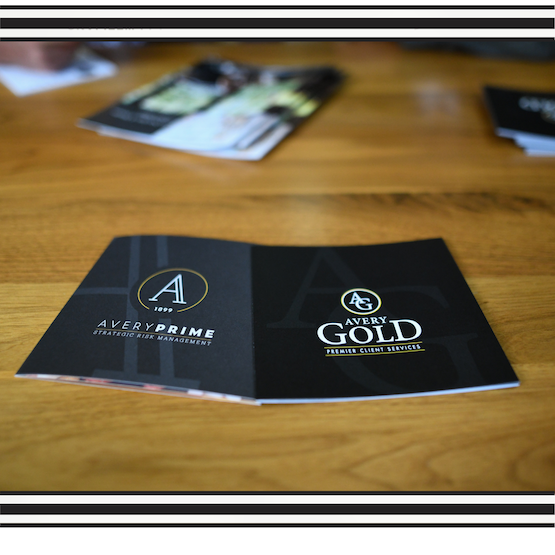
Own a home valued over $2 million? Our Premier Client Services program provides coverage built around high-value properties and the unique risks they carry.
Auto Insurance
Whether you drive a daily commuter, a classic car, or a motorcycle, Avery finds the right auto coverage for your vehicle and your budget.
Boat & Watercraft Insurance
From small boats on New Hampshire’s lakes to luxury yachts, Avery provides watercraft insurance covering your vessel, passengers, and liability on the water.
Umbrella / Personal Liability Insurance
An umbrella policy adds an extra layer of liability protection above your home and auto coverage. One of the most cost-effective ways to protect your financial future.
Valuable Possessions Insurance
Jewelry, art, collectibles, and other high-value items need coverage beyond a standard homeowners policy. Avery insures your most prized possessions at full appraised value.
Protect Your Business & Livelihood
Commercial Insurance Solutions Designed for New England Businesses.
Comprehensive Commercial Coverage That Keeps Your Business Running
General Liability Insurance
Protect your business from third-party claims of bodily injury, property damage, and personal injury. General liability is the foundation of any solid business insurance program.
Commercial Property Insurance
Covers your building, equipment, inventory, and other physical assets against fire, theft, vandalism, and other covered losses. Keep your business protected from the unexpected.
Workers’ Compensation Insurance
Workers’ comp covers medical costs and lost wages when an employee is injured on the job. Avery helps businesses meet state compliance requirements and manage costs effectively.
Cyber Liability Insurance
Data breaches and cyberattacks are a growing risk for businesses of all sizes. Cyber liability covers response costs, legal fees, and customer notification expenses after a security incident.
Employment Practices Liability Insurance
Covers your business against employee claims of wrongful termination, discrimination, harassment, and related issues. Essential for any business with employees.
Commercial Auto Insurance
Whether a single truck or a full fleet, commercial auto insurance protects your business against accidents, damage, and liability on the road.
We Know Your Industry
Tailored Insurance Programs for the Industries That Drive New Hampshire
We Understand the Risks Your Industry Faces — and How to Manage Them
Contractors Insurance
From general contractors to specialty trades, Avery understands the unique liability and property exposures your business faces on every job site in New England. We build coverage programs that keep your crew and company protected.
Restaurants & Hospitality
Restaurants, hotels, and marinas face distinct risks — from slip-and-fall liability to liquor liability and food spoilage. Avery designs coverage programs for the specific needs of the hospitality industry.
Real Estate & Property
Whether you own a portfolio of investment properties or manage a condo association, Avery provides the right mix of property, liability, and management coverage to protect your real estate investments.
We Make It Simple
Getting Covered with Avery Is Easy

Step 01
Connect with an Avery Advisor
Call, email, or request a coverage online and we will respond the same business day.

Step 02
We Build Your Coverage Plan
We shop top-rated carriers, compare your options, and recommend the best fit for your needs.
Step 03
You Get Protected and Stay Protected
We place your coverage, review it annually, and advocate for you if you ever need to file a claim.
Let’s Clear Things Up
Got Questions? We’ve Got Answers.
Straight Answers From the Advisors Who Know This State Best
What does it mean that Avery is an independent insurance agency?
An independent agency like Avery is not tied to any single insurance company. We represent multiple top-rated carriers, which means we can shop the market on your behalf and recommend the coverage that truly fits your needs — not the one that benefits any single insurer.
This independence gives you access to more options and unbiased advice. Our advisors are compensated to serve your interests, not to push a specific product. That is a significant advantage over captive agents who can only offer one carrier’s policies.
How much does it cost to work with an Avery advisor?
There is no direct cost to you for working with an Avery advisor. Independent agents are compensated through commissions paid by the insurance carriers when a policy is placed. You receive expert guidance, market comparisons, and ongoing service at no extra charge.
In fact, many clients find that working with Avery saves them money. Our advisors know how to identify the right coverage levels so you are not paying for protection you do not need, and you are not left exposed where you do.
Does Avery help with claims?
Yes — and this is one of the most important things that sets Avery apart. When you have a claim, our in-house claims advisors go to work for you. We guide you through the process, communicate with the insurance company, and advocate for a fair and timely outcome.
Several of our team members hold professional claims designations, including AIC and AINS. We do not just help you file paperwork — we actively represent your interests to make sure you receive the full benefit your policy provides.
Where in New Hampshire does Avery provide coverage?
Avery serves clients throughout the state of New Hampshire from our offices in Wolfeboro and Portsmouth. Whether you live in the Lakes Region, the Seacoast, the White Mountains, or the Merrimack Valley, an Avery advisor is ready to help you find the right coverage.
Our advisors understand the specific risks that come with living and doing business in New Hampshire — from harsh winter weather to seasonal watercraft exposure. We apply that local knowledge to every coverage recommendation we make.
How does Avery handle high-value homes and assets?
Avery offers a dedicated Premier Client Services program for clients with homes valued over .5 million, significant investment portfolios, fine art collections, jewelry, yachts, and other complex assets. This program pairs you with a specialist who understands the unique risks of high-net-worth households.
Through carriers that specialize in high-value personal lines, we provide guaranteed replacement cost coverage, agreed value policies, and comprehensive risk management strategies. Your advisor will conduct a detailed review of your full asset portfolio to make sure nothing is overlooked or underinsured.
How often should I review my insurance coverage?
Avery recommends a full coverage review at least once a year. Major life events — buying a home, starting a business, adding a vehicle, getting married, or making significant home improvements — are all good triggers for an immediate review outside your annual cycle.
Insurance needs change over time, and policies that were right for you a few years ago may leave gaps today. Avery advisors proactively reach out to clients for annual reviews and keep up with changes in the insurance market that could affect your coverage or premium. Our goal is to make sure you are always protected and never paying for coverage that no longer fits.
Insurance Tips & News
Stay Informed with the Avery Blog
Practical Insurance Advice for New Hampshire Families and Business Owners





Contact Us
Portsmouth (HQ)
7 Islington St #102, Portsmouth, NH 03801
Phone Number: 603.766.3733
Wolfeboro
21 S Main Street, Wolfeboro, NH 03894
Phone Number: 603.569.2515