
Call Us: 603-766-3733
A 1967 Shelby GT500 sells at auction for $185,000. Three months later, it's totaled in a highway accident. The owner's standard auto policy offers $94,000 based on depreciation tables designed for daily drivers, not rare muscle cars. That gap between what a collector car is worth and what a regular insurer will pay is the single most expensive mistake enthusiasts make.
Getting the agreed value right on a collector car policy, keeping appraisals current as market conditions shift, and understanding how claims actually work: these are the three pillars that protect a serious automotive investment. Whether you own a matching-numbers Corvette or a low-mileage E30 M3 that's tripled in value over five years, the wrong coverage structure can cost you tens of thousands of dollars in a single incident. And with total loss frequency reaching a record high of 23.1% in 2026, the odds of needing that policy to perform have never been higher. Here's what you need to know before your next renewal.
Understanding Agreed Value vs. Stated Amount
The distinction matters most on claim day. With stated value, the insurance company retains the right to depreciate your vehicle and pay less than the number printed on your declarations page. Agreed value has become the non-negotiable standard for collectors precisely because it eliminates that argument. You know what you'll receive, period.
How Agreed Value Protects Against Depreciation
Standard auto policies treat every vehicle as a depreciating asset. That makes sense for a 2023 Camry, which loses value the moment it leaves the lot. It makes zero sense for a 1970 Plymouth 'Cuda that appreciates year over year. Agreed value coverage removes depreciation from the equation entirely. The payout reflects the car's collector market worth, not some algorithm designed for mass-market sedans.
The Role of Appraisals in Setting Policy Limits
Most specialty insurers require a certified appraisal for vehicles valued above a certain threshold. For lower-value collector cars, detailed photos and documentation of the car's condition and provenance may suffice. Some providers like Heacock Classic now offer streamlined valuations for modern collectibles using real-time auction data rather than requiring a formal physical inspection, which speeds up the process considerably for popular models.
Collector Car Valuation Differences
The gap between standard and specialty policies isn't just about the payout formula. It extends to how premiums are calculated, what usage restrictions apply, and what documentation is expected. Understanding these differences upfront prevents surprises later.
Comparison Chart: Standard vs. Collector Policies
| Feature | Standard Auto Policy | Collector/Agreed Value Policy |
|---|---|---|
| Valuation Method | Actual cash value (depreciated) | Pre-agreed fixed amount |
| Payout on Total Loss | Market value minus depreciation | Full agreed amount |
| Appraisal Required | No | Yes, for high-value vehicles |
| Usage Restrictions | None | Mileage caps, pleasure use only |
| Premium Basis | Driver age, location, claims history | Vehicle value, storage, usage |
| Modification Coverage | Rarely included | Typically covered if documented |
| Spare Parts Coverage | Not available | Often available as endorsement |
The premium difference often surprises people. Collector car policies frequently cost less than standard coverage because insurers know these vehicles are stored carefully, driven sparingly, and maintained obsessively.
Current Trends in the Collector Car Market
The collector car market in 2026 looks different than it did even three years ago. Shifting demographics, inflation, and new legislation are all reshaping what cars are collectible and how they're insured.
Impact of Inflation on Replacement Costs
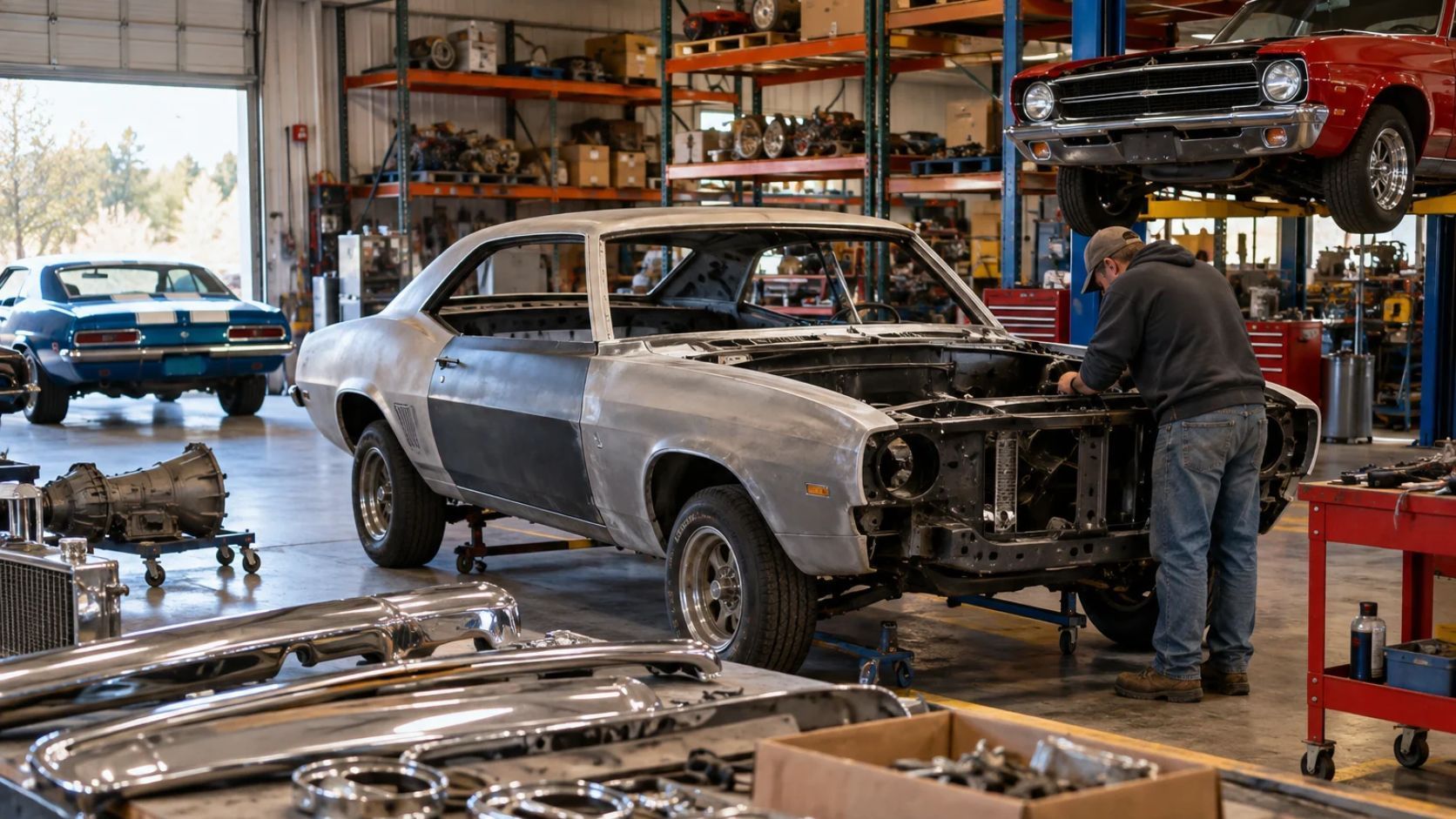
Restoration costs have climbed sharply. NOS (new old stock) parts for popular models like first-generation Camaros and early Broncos command premiums that would have seemed absurd in 2020. Labor rates at reputable restoration shops have followed suit. A frame-off restoration that cost significantly less just a few years ago might run much more today.
This means agreed values set two or three years ago may be dangerously low. If your policy lists $80,000 but replacement cost has crept to $110,000, you're self-insuring a $30,000 gap. Annual policy reviews with updated appraisals aren't optional: they're essential. Agencies like Avery Insurance Agency, which takes a consultative approach to uncovering coverage gaps, can help identify when your agreed value has fallen behind the market.
The Rise of Modern Classics and Youngtimers
The hottest segment of the collector market right now is cars from the 1980s and 1990s. Air-cooled Porsche 911s, E30 BMW M3s, Toyota Supras, and Fox-body Mustangs have all seen dramatic appreciation. These "youngtimers" present unique insurance challenges because they straddle the line between daily drivers and collectibles.
New legislation is also affecting this segment. California's "Leno's Law" (SB 1392), signed in September 2026, phases in smog-check exemptions for 1976-1985 model year collector vehicles driven under 1,000 miles annually and covered by a specialty policy. Washington state has moved in a parallel direction: effective January 2026, collector vehicle owners must carry active insurance or prove separate daily driver registration. Both laws reinforce the connection between specialty insurance and collector car ownership.
Navigating the Claims Process for Total Losses
Filing a total loss claim on a collector car is nothing like filing one on a regular vehicle. The stakes are higher, the documentation requirements are more specific, and the emotional weight of losing an irreplaceable car adds pressure to an already stressful process.
Proving Market Value During a Claim
Even with an agreed value policy, you'll want thorough documentation on hand. Keep your original appraisal, receipts for all restoration work, photographs showing condition before the loss, and records of comparable sales. This documentation isn't technically required to receive your agreed payout, but it speeds up the process and eliminates any friction with the adjuster.
For partial losses, proving the cost of correct repairs is often harder than proving total value. Collector cars require period-correct parts and specialized labor. Make sure your policy covers OEM or NOS parts, not aftermarket replacements. A repaint using modern base/clear on a car that was originally lacquer can actually decrease the vehicle's value.
Retention Rights and Salvage Titles
If your collector car is totaled, you may have the option to retain the salvage. This matters if the car has a rare body, a numbers-matching drivetrain, or components worth more than scrap value. Most agreed value policies allow retention, but the salvage value will be deducted from your payout.
Be aware that a salvage title permanently affects the car's future value and insurability. Some states make it extremely difficult to re-register a salvage-titled vehicle for road use. If you're considering retention, discuss the implications with your agent before accepting the settlement. Avery Insurance Agency's team, with over 125 years of client advocacy, can walk you through the specific rules in your state and help you make the right call.
Common Questions About Specialty Car Insurance
What happens if my car's value goes up after I sign the policy? You should update your policy annually or whenever a significant market shift occurs. Some insurers offer an inflation guard endorsement that automatically adjusts your agreed value by a set percentage each year, but a fresh appraisal every two to three years is still the best practice.
Do I need a professional appraisal to get agreed value coverage? For most vehicles under a certain value threshold, detailed photos and documentation of condition, mileage, and modifications are sufficient. High-value or rare vehicles typically require a certified professional appraisal. Some insurers now accept auction-data-based valuations for popular modern collectibles.
Can I drive my collector car to work under this policy? Most agreed value policies restrict usage to pleasure driving, car shows, club events, and occasional errands. Daily commuting almost always violates the policy terms. If you need a collector car for regular transportation, talk to your agent about hybrid coverage options, but expect higher premiums and different terms.
Will the insurance company pay the full amount if my car is stolen? Yes. With agreed value coverage, the insurer pays the exact dollar amount listed on your policy declarations page. There's no depreciation deduction, no negotiation over comparable sales, and no lowball offer. That's the entire point of the agreed value structure.
Making the Right Choice for Your Investment
A collector car is rarely just a financial asset. It's a connection to a specific era, a mechanical experience you can't replicate with modern vehicles, and often a project that represents years of searching, restoring, and refining. Protecting that investment with the right coverage structure isn't a luxury: it's a responsibility.
The core principles are straightforward. Get an agreed value policy, not stated value. Keep your appraisals current as market conditions and restoration costs evolve. Document everything about your vehicle's condition and provenance. Understand your policy's usage restrictions and salvage retention options before you need them.
If you're unsure whether your current coverage actually reflects what your car is worth, or if you're adding a new vehicle to your collection and want to get the policy right from the start, reach out to Avery Insurance Agency. Their consultative approach is built around uncovering the gaps that generic policies leave wide open, so you can enjoy the car without worrying about what happens if something goes wrong.
ABOUT THE AUTHOR:
Tod O’Dowd, CIC, CAPI
I'm the President of Avery Insurance Agency, a family-owned independent agency serving individuals and businesses across New England and in 40+ states. With a hands-on, consultative approach to personal and commercial risk, I help clients — from high-net-worth homeowners and contractors to restaurant owners and property managers — find the right coverage without the guesswork of working with a single-carrier agent.