Call Us: 603-766-3733
A 1967 Shelby GT500 sits in a restoration shop with significant investment in parts and labor already committed. The owner's standard auto policy? It covers the car for maybe $8,000: whatever a rusty, disassembled project car would fetch at auction according to standard Actual Cash Value (ACV) calculations (https://www.thezebra.com/resources/car-insurance/is-my-car-totaled-calculator/). That gap between what you've spent and what your insurer would actually pay is where restoration dreams die.
This is the core problem with insuring a car that's mid-build. The value isn't static. It climbs with every hour of labor, every NOS part bolted on, every coat of paint laid down. Getting the right coverage for parts, labor, and the appreciation that follows a quality restoration isn't optional: it's the difference between a recoverable setback and a financial catastrophe. Collector car restoration coverage that accounts for parts, labor, and value growth requires a fundamentally different approach than anything a standard policy offers.
If you're pouring five or six figures into a project car, you need to understand how agreed value policies, vehicle-under-construction endorsements, and proper documentation work together to protect every dollar you invest. Here's what actually matters.
Understanding Agreed Value vs. Stated Amount
Why Standard Auto Policies Fail Restoration Projects
Standard auto policies use actual cash value (ACV), which means they pay out based on what your car is worth right now, minus depreciation. For a disassembled project car, that number is shockingly low. Your insurer sees a pile of parts and a bare chassis, not the $60,000 restoration you've planned. ACV policies factor in depreciation, which is the exact opposite of what happens during a restoration: your car gains value with every completed phase.
How Agreed Value Protects Your Investment
Agreed value policies work differently. You and your insurer settle on a specific dollar amount before the policy begins, supported by an appraisal. If the car is totaled, you receive that full amount: no depreciation, no haggling, no adjuster deciding your matching-numbers engine block is worth junkyard prices. This approach has become the industry standard for collector vehicles in 2026, and for good reason. Restoration costs routinely exceed a car's pre-restoration market value, making ACV coverage dangerously inadequate.
Protecting Rare Parts and Specialized Labor
Parts and labor represent the bulk of any serious restoration budget, and they're the hardest costs to recover without proper coverage. A single set of NOS trim pieces for a muscle car can run thousands, and skilled labor isn't getting cheaper.
Insuring New Old Stock (NOS) and Custom Components
NOS parts are irreplaceable by definition. If a fire destroys your stash of factory-original Weber carburetors or date-coded spark plug wires, no insurance adjuster can source replacements at Autozone. Your policy needs to explicitly cover parts inventory, whether those parts are installed on the car or sitting on a shelf in your garage. Custom-fabricated components: hand-formed fenders, rebuilt transmissions, machined engine internals: need documented values that reflect the actual cost to reproduce them, not some generic parts-store equivalent.
Accounting for Professional Restoration Labor Costs
Specialized restoration labor rates have climbed to a national average of $163 per hour in 2026, with top-tier shops in certain markets charging well above that. An engine rebuild alone can consume 80 to 120 hours of skilled labor. If your car suffers damage mid-restoration, your policy needs to cover the cost of redoing that work at current shop rates, not the rate you paid two years ago when the project started. Make sure your coverage reflects labor at replacement cost, not historical cost.
Managing Coverage During the Restoration Process
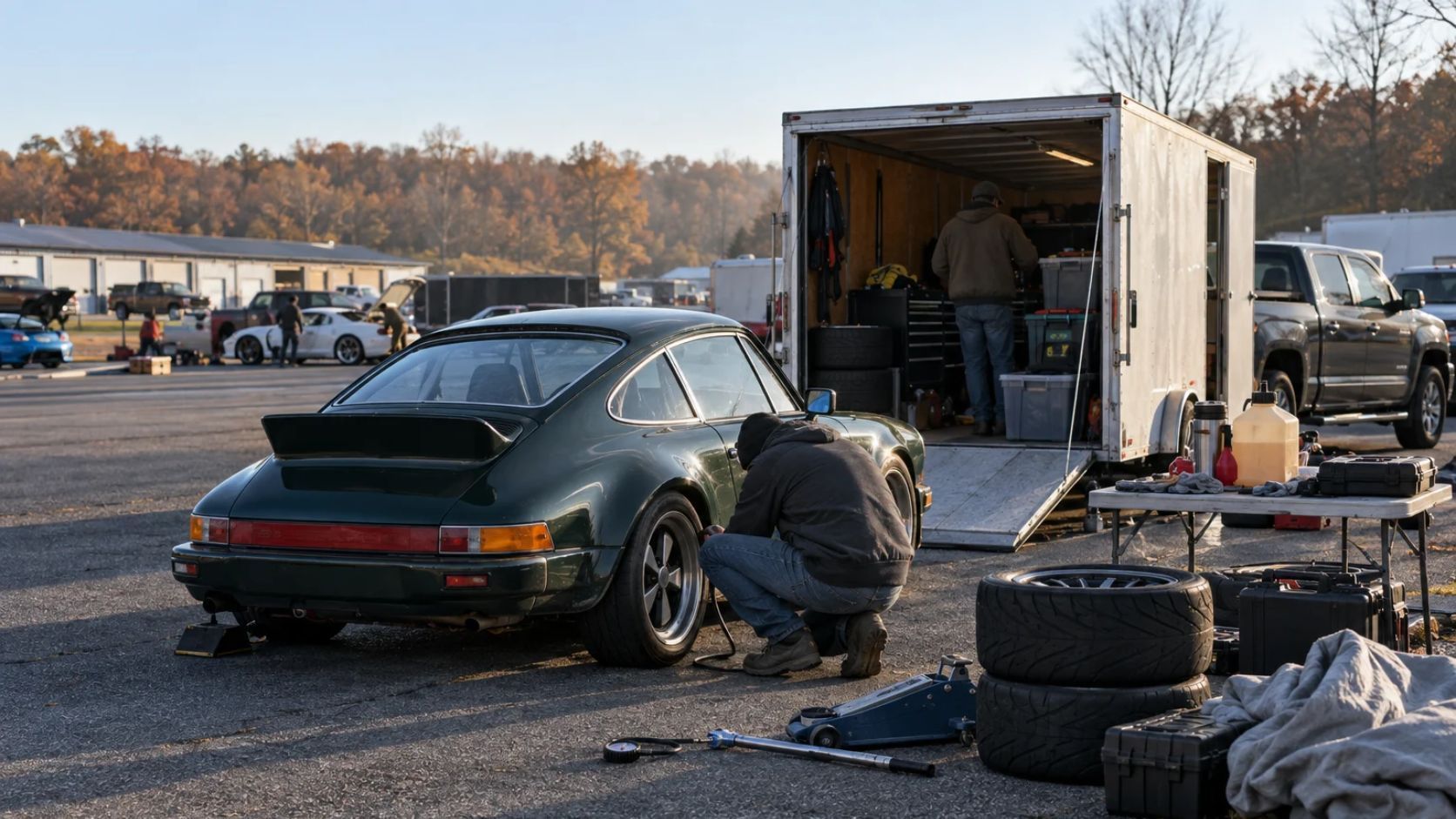
The restoration phase is when your car is most vulnerable and hardest to insure properly. It might be in pieces across multiple locations, and its value changes month to month.
Vehicle-in-Process Coverage Limits
This is where vehicle-under-construction (VUC) endorsements earn their keep. Insurers like Hagerty offer VUC endorsements that automatically increase a vehicle's guaranteed value by 10% per quarter, up to a $25,000 maximum, accounting for the labor and parts being added over time. That automatic escalation matters because most owners underestimate how quickly costs accumulate. Without it, you'd need to call your agent every time you hit a new spending milestone, and most people simply don't.
Spare Parts and Off-Site Storage Protection
Parts don't always stay in one place. You might have an engine at the machine shop, a body at the paint booth, and trim pieces in your home garage. Your policy should cover components regardless of location, including transit between locations. Ask specifically about off-premises coverage limits and whether your policy extends to parts stored at a restoration shop that you don't own. A shop fire that destroys your parts is your loss, not the shop owner's, unless your insurance says otherwise.
Comparison: Project Coverage vs. Finished Vehicle Insurance
| Feature | Mid-Restoration (VUC) Policy | Completed Vehicle (Agreed Value) |
|---|---|---|
| Valuation Method | Escalating agreed value, adjusted quarterly | Fixed agreed value, set at policy inception |
| Parts Coverage | Installed and uninstalled parts, often multi-location | Installed components only |
| Labor Recovery | Covers cost to redo completed work | N/A: car is already finished |
| Typical Value Cap | Base value plus quarterly increases (e.g., up to $25K above base) | Full appraised value |
| Usage Restrictions | Vehicle is non-operational; no mileage requirements | Limited mileage (tiers vary by carrier) (https://www.forbes.com/advisor/car-insurance/best-classic-car-insurance/) |
| Appraisal Frequency | Recommended every 6-12 months during build | Every 2-3 years or after market shifts |
The key takeaway: you need different coverage at different stages. A policy that's perfect for a finished show car won't adequately protect a half-assembled project, and vice versa.
Documenting Value Growth and Appreciation
Your coverage is only as strong as your documentation. Insurers pay claims based on evidence, and the collector car market in 2026 is moving fast enough that outdated appraisals can cost you tens of thousands.
The Importance of Regular Appraisals
The 2026 Monterey auctions hit $755.6 million in total sales, a 60% increase over 2022. Modern classics like the 1995-1998 Nissan Skyline GT-R and 2006-2013 Corvette Z06 are showing particularly strong appreciation. If your car falls into a rising market segment, an appraisal from two years ago might undervalue it by 30% or more. Get a fresh appraisal at least annually during active restoration and whenever the market for your particular model shifts significantly.
Maintaining a Restoration Log for Claims Support
Keep everything. Every receipt, every photo, every communication with your restoration shop. A detailed restoration log serves two purposes: it supports your agreed value during policy negotiations, and it provides ironclad evidence during claims. Photograph each phase of the restoration, date-stamp your images, and store copies digitally in at least two locations. This isn't busywork: it's the difference between a smooth claim and a months-long dispute.
Common Questions About Restoration Insurance
Does my homeowner's policy cover car parts stored in my garage? Typically, no: or only up to a very low sublimit. Homeowner's policies treat auto parts as personal property, but most cap coverage for items in detached structures. A dedicated collector car policy with spare parts coverage is the reliable answer.
Can I insure a car that doesn't run? Yes. VUC endorsements exist specifically for non-operational vehicles undergoing restoration. You'll need photos and an initial appraisal, but the car doesn't need to be drivable.
How often should I update my agreed value during a restoration? Every six months at minimum, or whenever you complete a major phase (engine rebuild, paint, interior). Some policies escalate automatically, but manual updates ensure you're never caught short.
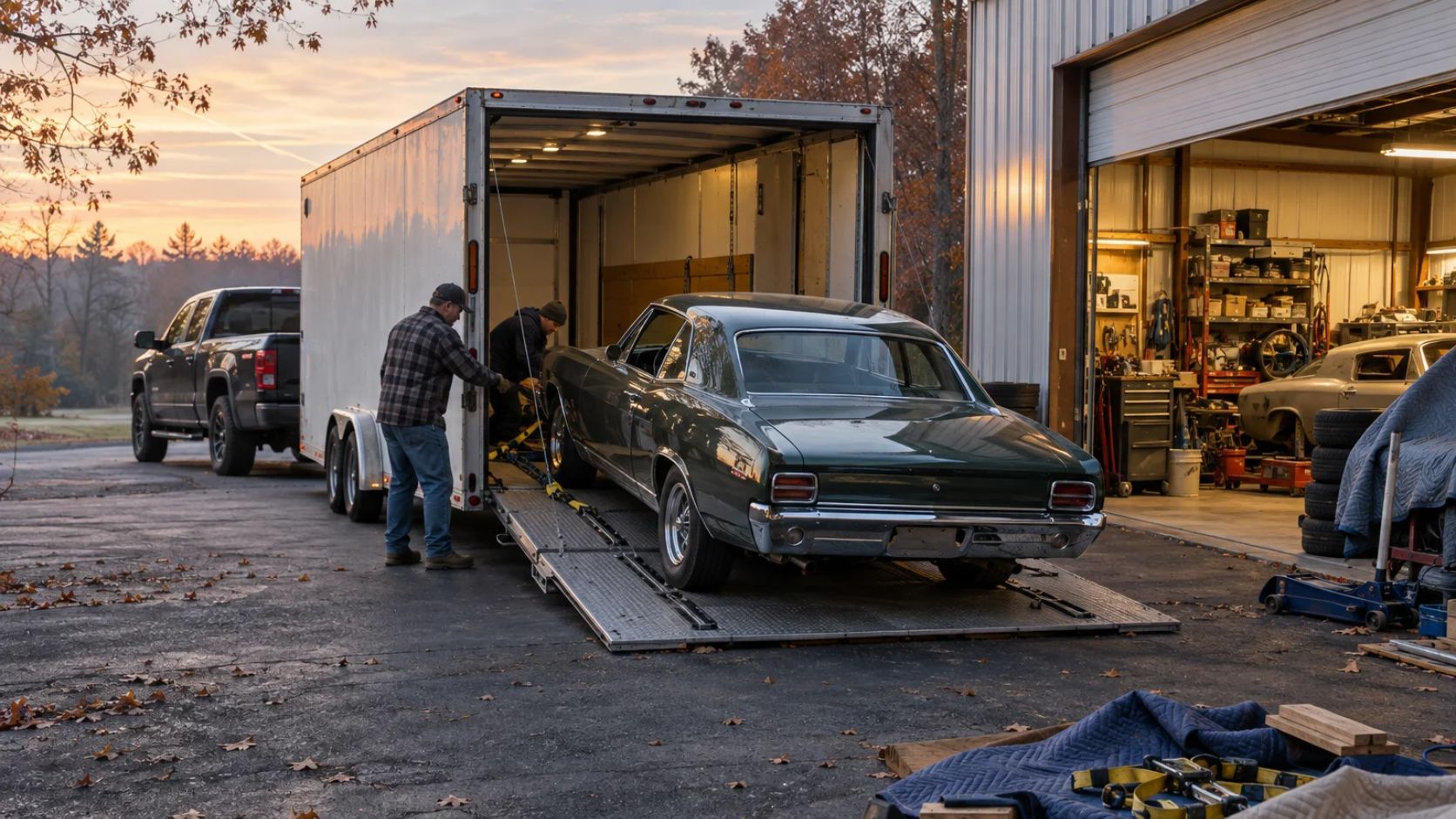
What happens if my restoration shop goes out of business mid-project? Your coverage follows the car and parts, not the shop. But recovering your property from a defunct business can be complicated. Make sure your policy covers the cost of transporting the vehicle and parts to a new facility.
Do I need separate coverage for a trailer used to transport my project car? Yes. Your collector car policy covers the vehicle, not the trailer. Ask your agent about a separate inland marine or auto policy for the trailer itself.
Why a Consultative Approach Matters for Collector Coverage
Cookie-cutter insurance doesn't work for collector cars. Every restoration is different: different marques, different budgets, different timelines, different risk profiles. An agency like Avery Insurance Agency, which has spent over 125 years building custom coverage solutions, understands that a frame-off Corvette restoration has completely different insurance needs than a sympathetic refresh of a pre-war Packard. The consultative approach: sitting down, reviewing your build plan, identifying gaps, and structuring coverage around your specific project: is the only way to get this right.
Red Flags in Restoration Policies
Watch for these warning signs in any policy you're considering:
- No explicit mention of spare parts or off-premises coverage
- Actual cash value language buried in the fine print, even when the policy is marketed as "agreed value"
- Quarterly value escalation caps that are too low for your build pace
- Exclusions for vehicles disassembled beyond a certain percentage
- No coverage for parts in transit between your home and the restoration shop
If your current policy has any of these gaps, it's worth a conversation with a specialist agent before your next invoice from the shop arrives.
Protecting Value Growth After the Restoration Is Complete
Finishing the restoration isn't the end of your insurance obligations: it's a new beginning. Once the car is complete, transition from a VUC endorsement to a full agreed value collector policy. Get a post-restoration appraisal immediately, while every detail and cost is fresh. Then schedule regular reappraisals every two to three years, or sooner if your model starts trending upward in the market.
The collector car market rewards quality restorations. A properly documented, concours-level restoration on a desirable model can appreciate significantly within just a few years. Your insurance should keep pace with that growth, not lag behind it.
Building a Long-Term Relationship With Your Agent
The best collector car insurance isn't a transaction: it's an ongoing relationship. Your needs change as your collection grows, as market values shift, and as you take on new projects. Working with an agency that understands high-value assets and takes the time to review your portfolio annually, like the team at Avery Insurance Agency, means you're not scrambling to figure out coverage after something goes wrong. You're already protected.
The Bottom Line for Your Project
Restoration insurance that properly covers parts, labor, and value growth isn't a luxury: it's a necessity for anyone serious about their build. Start with an agreed value policy, add a vehicle-under-construction endorsement during the build phase, document everything obsessively, and get regular appraisals. The collector market is strong in 2026, and a well-restored car is both a passion project and a real financial asset.
Don't wait until you're $50,000 deep in a restoration to figure out your insurance. Reach out to the team at Avery Insurance Agency for a consultative review of your project, your collection, and your coverage. The peace of mind is worth every minute of that conversation.
ABOUT THE AUTHOR:
Tod O’Dowd, CIC, CAPI
I'm the President of Avery Insurance Agency, a family-owned independent agency serving individuals and businesses across New England and in 40+ states. With a hands-on, consultative approach to personal and commercial risk, I help clients — from high-net-worth homeowners and contractors to restaurant owners and property managers — find the right coverage without the guesswork of working with a single-carrier agent.