
New Hampshire
Builders General Liability Insurance
Call Us: 603-766-3733
New Hampshire's construction sector is booming, and with that growth comes real exposure. The state's builders face a unique combination of harsh weather, evolving building codes, and a legal environment that can turn a single jobsite incident into a six-figure claim. If you're a contractor working anywhere from the Seacoast to the White Mountains, your general liability policy isn't just a box to check for a contract requirement: it's the financial backbone of your business. Getting the right coverage, from the right carrier, at the right price requires understanding how New Hampshire's specific risks shape everything from underwriting appetite to claims outcomes. This guide breaks down specialized coverage considerations, what carriers are actually looking for, and how NH builders can protect themselves without overpaying.
The New Hampshire Construction Landscape and Liability Risks
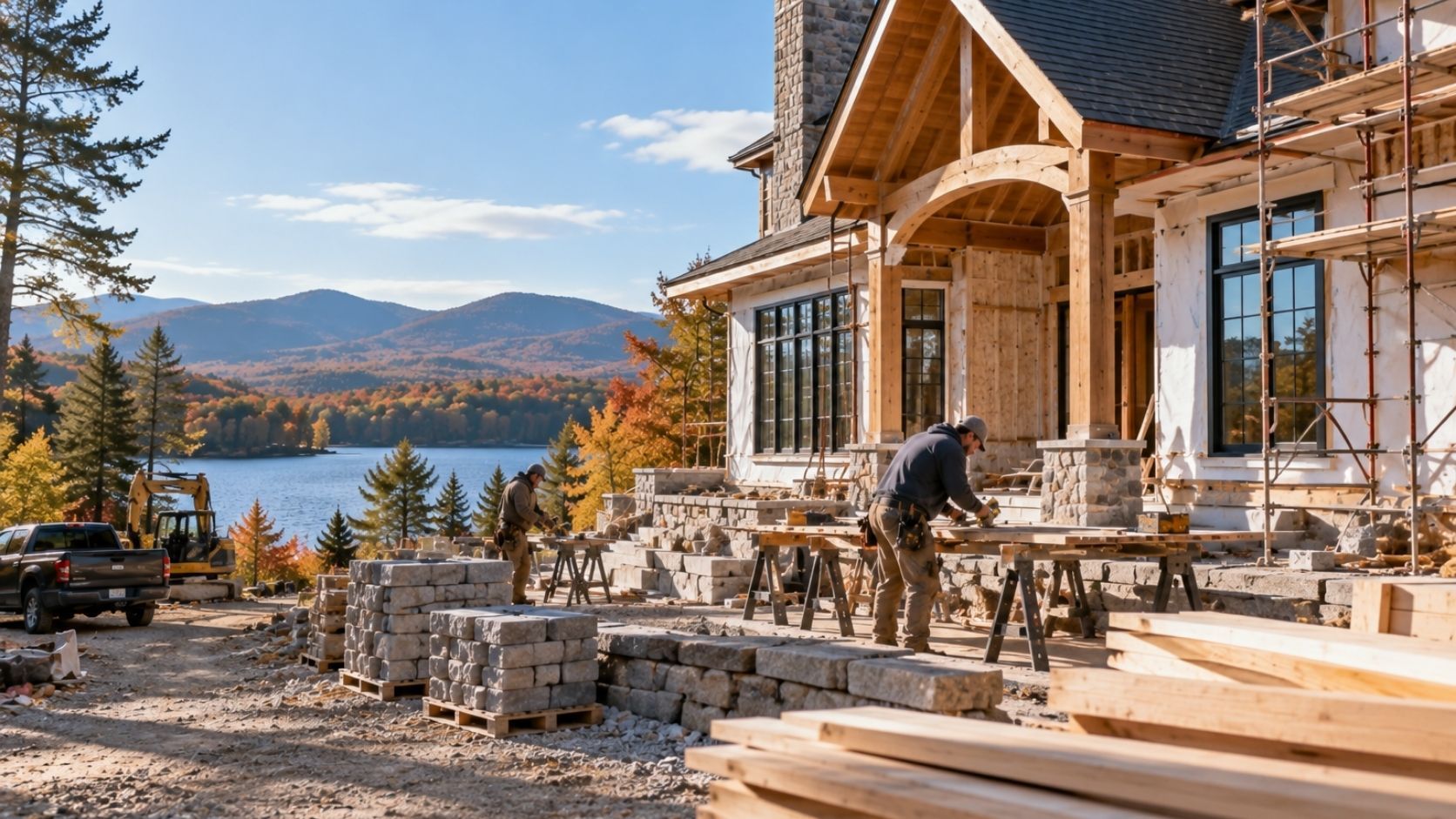
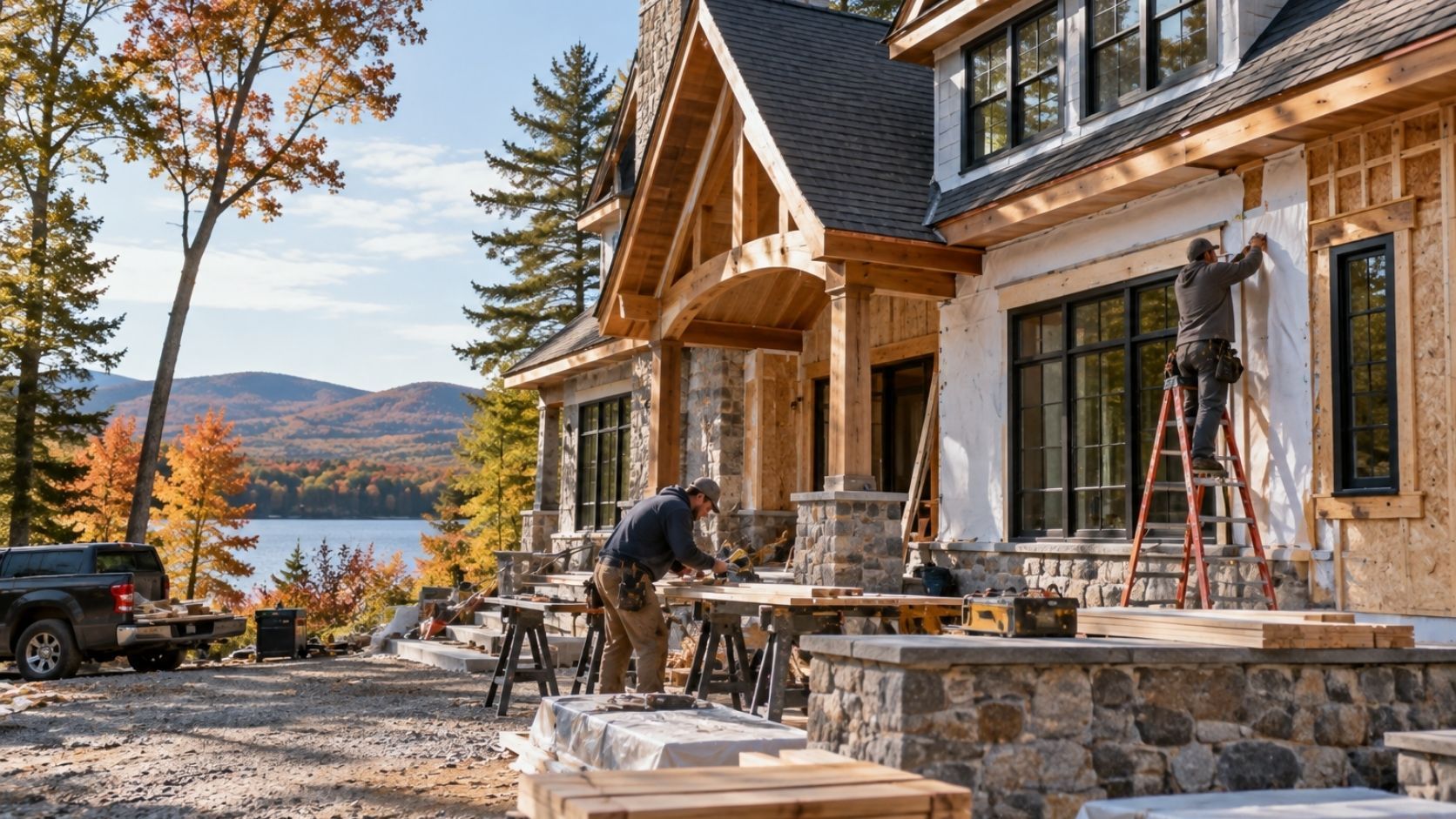
New Hampshire's building industry punches above its weight. The construction sector contributed approximately $3.35 billion to the state's Gross State Product in 2022, and housing permits grew to 5,726 that same year. That kind of activity means more crews on more sites, more subcontractors in the mix, and more chances for something to go wrong. Whether you're framing custom homes in Wolfeboro or running a commercial renovation in Manchester, your liability exposure grows with every project.
State-Specific Regulatory Requirements for NH Contractors
New Hampshire doesn't require a general contractor's license at the state level, which surprises a lot of people. Instead, licensing happens at the municipal level, and requirements vary wildly from town to town. What the state does require is that certain trades - electricians, plumbers, and gas fitters - carry specific licenses. This patchwork system means that general liability insurance often becomes the de facto proof of professionalism for builders. Many municipalities and general contractors require proof of GL coverage before a sub can set foot on a jobsite.
The state also enforces its own workers' compensation laws, and the interplay between workers' comp and GL coverage matters. If an employee is injured and your workers' comp lapses, a GL policy won't save you. Builders need both, and they need them structured correctly.
Climate and Topography Challenges Affecting Builder Risk
Anyone who's built through a New Hampshire winter knows the risks aren't theoretical. Freeze-thaw cycles wreak havoc on foundations and masonry. Heavy snow loads stress roof structures, and ice dams cause water intrusion claims that can surface months or years after project completion. The state's granite-rich soil creates excavation challenges, and steep terrain in the Lakes Region and North Country increases the likelihood of grading and drainage failures.
These climate factors directly influence your liability profile. A builder in Nashua working on flat suburban lots has a fundamentally different risk than a contractor building hillside homes in Franconia. Carriers know this, and they price accordingly.

By: Tod O’Dowd, CIC, CAPI
President of Avery Insurance Agency
Essential General Liability Coverage for Granite State Builders
A standard GL policy covers bodily injury and property damage to third parties, but NH builders need to look beyond the basics. The real value of a well-structured policy shows up in the endorsements and extensions that address construction-specific exposures.
Completed Operations and Products Liability
Here's where many builders get caught off guard. Your GL policy has two main coverage parts: premises/operations (covering incidents during active construction) and completed operations (covering claims that arise after you've finished the work and handed over the keys). A leaking roof that damages a homeowner's interior two years after completion? That's a completed operations claim.
In New Hampshire's climate, completed operations coverage is critical. Water intrusion, settling foundations, and failed weatherproofing systems are among the most common post-completion claims. Make sure your policy maintains completed operations coverage for the full statute of repose period, and never let a carrier talk you into dropping it to save on premium.
Blanket Additional Insured and Waiver of Subrogation
If you work as a subcontractor, you'll be asked to add the general contractor as an additional insured on your policy roughly 100% of the time. A blanket additional insured endorsement handles this automatically for any party required by written contract, saving you from issuing individual endorsements for every project.
Waiver of subrogation endorsements are equally common in contract requirements. This prevents your insurance carrier from going after the GC's insurer to recover claim payments. Both endorsements are standard in the NH construction market, but not every policy includes them automatically. Confirm they're part of your coverage before you sign your next subcontract agreement.
Understanding Carrier Appetite in the NH Construction Market
Not every insurance company wants to write construction risks, and the ones that do have very specific preferences. Understanding carrier appetite saves you time and often money.
Preferred Risks: Residential vs. Commercial Construction
Carriers generally view residential builders - especially those doing single-family custom homes and renovations - as more desirable risks than heavy commercial or infrastructure contractors. A residential framing contractor with five years of clean loss history is a straightforward account. A contractor doing commercial concrete work with a crane on site is a different conversation entirely.
| Factor | Residential Builders | Commercial Builders |
|---|---|---|
| Typical Premium Range | $2,500 - $8,000/year | $7,000 - $25,000+/year |
| Carrier Availability | Broad: many standard markets | Narrower: often specialty markets |
| Underwriting Complexity | Moderate | High |
| Subcontractor Requirements | Varies by GC | Strict and detailed |
| Completed Operations Exposure | Moderate to High | High |
The good news for NH builders is that more than 30 new insurance companies entered the New Hampshire market in 2025, which means more competition and potentially better pricing for well-run operations.
Factors Influencing Underwriting Decisions and Premium Rates
Carriers look at several key factors when deciding whether to write your policy and what to charge. Your trade classification matters most: a painter pays far less than a foundation contractor. After that, carriers evaluate your claims history (three to five years), annual revenue or payroll, subcontractor management practices, and the types of projects you take on.
Industry forecasts show CGL premiums are expected to increase between 1% and 9% through 2025, so builders should budget for modest rate increases. That said, while rates for general liability start as low as $5 per month for low-risk businesses, construction operations almost always fall into higher-risk categories. Expect to pay meaningfully more than that floor.
An experienced agency like Avery Insurance Agency, which has spent over 125 years working with New Hampshire businesses, can identify which carriers have the strongest appetite for your specific trade and loss profile. That kind of market knowledge often makes the difference between an overpriced policy from the wrong carrier and a well-fitted program.
Understanding how claims work in New Hampshire - and what legal protections exist - helps you make smarter coverage decisions.
New Hampshire Statutes of Repose and Limitations
New Hampshire's statute of repose for construction defect claims is eight years from substantial completion of the project (RSA 508:4-b). This means a homeowner can bring a claim against you for defective work up to eight years after you finished the job. The statute of limitations for property damage is generally three years from the date the damage is discovered or should have been discovered.
What this means practically: you need to maintain your completed operations coverage for at least eight years after finishing any project. Letting your policy lapse or switching to a claims-made form without understanding the tail exposure can leave you uninsured for legitimate claims.
Common Construction Defect Claims in the Northeast
The most frequent construction defect claims in New Hampshire and the broader Northeast fall into predictable categories. Water intrusion tops the list: failed flashing, improper window installation, and inadequate vapor barriers account for a significant share of claims. Structural issues related to improper load calculations, foundation cracking, and frost heave damage follow closely behind.
Mold claims are increasingly common too, often as a secondary result of water intrusion that went undetected. These claims tend to be expensive because remediation costs escalate quickly once mold spreads behind walls. A strong GL policy with adequate per-occurrence and aggregate limits is your first line of defense.
Strategies for Optimizing Coverage and Controlling Costs
Smart builders treat insurance as a business tool, not just an expense. There are concrete steps you can take to get better coverage at lower cost.
Risk Management and Safety Protocol Implementation
Carriers reward builders who demonstrate proactive safety management. Documented safety programs, regular toolbox talks, OSHA compliance records, and written subcontractor qualification procedures all signal to underwriters that you're a lower risk. Some carriers offer premium credits of 5% to 15% for formalized safety programs.
As Julie Glosner of the NH Small Business Development Center has noted, "insurance is definitely a key component of a business" - and treating it as a strategic priority rather than an afterthought pays dividends. Keep incident logs, document near-misses, and maintain certificates of insurance from every subcontractor. These practices reduce both your actual risk and your perceived risk in the eyes of carriers.
The Importance of Annual Audits and Policy Reviews
Most GL policies for contractors are auditable, meaning the carrier will adjust your premium at the end of the policy period based on actual revenue or payroll. If your business grew significantly, expect an additional premium bill. If it shrank, you may get a return premium.
Review your policy annually with your agent - not just at renewal. Projects change, revenue fluctuates, and new exposures emerge. A consultative agency like Avery Insurance Agency builds tailored portfolios that evolve with your business, uncovering vulnerabilities before they become claims. That annual review is where coverage gaps get caught and fixed.
General liability insurance for New Hampshire builders isn't one-size-fits-all. Your trade, your project types, your loss history, and even the geography of where you build all shape what you need and what you'll pay. The carriers entering New Hampshire's market in 2025 create real opportunity for builders willing to shop strategically with an experienced agent.
Get your safety documentation in order, understand your completed operations exposure, and work with an agency that knows the NH construction market inside and out. The right coverage protects not just your current projects but the business you've spent years building. Reach out to Avery Insurance Agency for a consultative review of your current program: sometimes the gaps you don't know about are the ones that cost the most.
Frequently Asked Questions
Does New Hampshire require builders to carry general liability insurance? The state doesn't mandate GL coverage by law for general contractors, but most municipalities, general contractors, and project owners require proof of coverage before allowing work to begin.
How much does GL insurance typically cost for an NH builder? Costs vary widely by trade and revenue, but most active residential builders pay between $2,500 and $8,000 annually. Commercial contractors and higher-risk trades pay significantly more.
What's the difference between occurrence and claims-made GL policies? Occurrence policies cover incidents that happen during the policy period regardless of when the claim is filed. Claims-made policies only cover claims reported while the policy is active. Most contractors should carry occurrence-based coverage.
How long can someone file a construction defect claim in New Hampshire? The statute of repose is eight years from substantial completion. The statute of limitations is three years from discovery of the damage.
Do I need separate completed operations coverage?
Completed operations is typically included in your GL policy, but coverage limits and duration matter. Confirm with your agent that your policy maintains this coverage for the full eight-year repose period.
ABOUT THE AUTHOR:
Tod O’Dowd, CIC, CAPI
I'm the President of Avery Insurance Agency, a family-owned independent agency serving individuals and businesses across New England and in 40+ states. With a hands-on, consultative approach to personal and commercial risk, I help clients — from high-net-worth homeowners and contractors to restaurant owners and property managers — find the right coverage without the guesswork of working with a single-carrier agent.
What Our Clients Say
Trusted by Families and Businesses for Over a Century
Trusted by New Hampshire Families and Businesses for Over a Century

Your Life. Protected.
Complete Personal Insurance for Individuals Who Expect More
One Agency. Every Coverage You Need. No Gaps, No Surprises.
Home Insurance
Your home is your most valuable asset. Avery’s home insurance protects your property, belongings, and liability so you can feel secure no matter what happens.
High-Value Home Insurance
Own a home valued over $2 million? Our Premier Client Services program provides coverage built around high-value properties and the unique risks they carry.
Auto Insurance
Whether you drive a daily commuter, a classic car, or a motorcycle, Avery finds the right auto coverage for your vehicle and your budget.
Boat & Watercraft Insurance
From small boats on New Hampshire’s lakes to luxury yachts, Avery provides watercraft insurance covering your vessel, passengers, and liability on the water.
Umbrella / Personal Liability Insurance
An umbrella policy adds an extra layer of liability protection above your home and auto coverage. One of the most cost-effective ways to protect your financial future.
Valuable Possessions Insurance
Jewelry, art, collectibles, and other high-value items need coverage beyond a standard homeowners policy. Avery insures your most prized possessions at full appraised value.
Protect Your Business & Livelihood
Commercial Insurance Solutions Designed for New England Businesses.
Comprehensive Commercial Coverage That Keeps Your Business Running
General Liability Insurance
Protect your business from third-party claims of bodily injury, property damage, and personal injury. General liability is the foundation of any solid business insurance program.
Commercial Property Insurance
Covers your building, equipment, inventory, and other physical assets against fire, theft, vandalism, and other covered losses. Keep your business protected from the unexpected.
Workers’ Compensation Insurance
Workers’ comp covers medical costs and lost wages when an employee is injured on the job. Avery helps businesses meet state compliance requirements and manage costs effectively.
Cyber Liability Insurance
Data breaches and cyberattacks are a growing risk for businesses of all sizes. Cyber liability covers response costs, legal fees, and customer notification expenses after a security incident.
Employment Practices Liability Insurance
Covers your business against employee claims of wrongful termination, discrimination, harassment, and related issues. Essential for any business with employees.
Commercial Auto Insurance
Whether a single truck or a full fleet, commercial auto insurance protects your business against accidents, damage, and liability on the road.
We Know Your Industry
Tailored Insurance Programs for the Industries That Drive New Hampshire
We Understand the Risks Your Industry Faces — and How to Manage Them
Contractors Insurance
From general contractors to specialty trades, Avery understands the unique liability and property exposures your business faces on every job site in New England. We build coverage programs that keep your crew and company protected.
Restaurants & Hospitality
Restaurants, hotels, and marinas face distinct risks — from slip-and-fall liability to liquor liability and food spoilage. Avery designs coverage programs for the specific needs of the hospitality industry.
Real Estate & Property
Whether you own a portfolio of investment properties or manage a condo association, Avery provides the right mix of property, liability, and management coverage to protect your real estate investments.
We Make It Simple
Getting Covered with Avery Is Easy

Step 01
Connect with an Avery Advisor
Call, email, or request a coverage online and we will respond the same business day.

Step 02
We Build Your Coverage Plan
We shop top-rated carriers, compare your options, and recommend the best fit for your needs.

Step 03
You Get Protected and Stay Protected
We place your coverage, review it annually, and advocate for you if you ever need to file a claim.
Let’s Clear Things Up
Got Questions? We’ve Got Answers.
Straight Answers From the Advisors Who Know This State Best
What does it mean that Avery is an independent insurance agency?
An independent agency like Avery is not tied to any single insurance company. We represent multiple top-rated carriers, which means we can shop the market on your behalf and recommend the coverage that truly fits your needs — not the one that benefits any single insurer.
This independence gives you access to more options and unbiased advice. Our advisors are compensated to serve your interests, not to push a specific product. That is a significant advantage over captive agents who can only offer one carrier’s policies.
How much does it cost to work with an Avery advisor?
There is no direct cost to you for working with an Avery advisor. Independent agents are compensated through commissions paid by the insurance carriers when a policy is placed. You receive expert guidance, market comparisons, and ongoing service at no extra charge.
In fact, many clients find that working with Avery saves them money. Our advisors know how to identify the right coverage levels so you are not paying for protection you do not need, and you are not left exposed where you do.
Does Avery help with claims?
Yes — and this is one of the most important things that sets Avery apart. When you have a claim, our in-house claims advisors go to work for you. We guide you through the process, communicate with the insurance company, and advocate for a fair and timely outcome.
Several of our team members hold professional claims designations, including AIC and AINS. We do not just help you file paperwork — we actively represent your interests to make sure you receive the full benefit your policy provides.
Where in New Hampshire does Avery provide coverage?
Avery serves clients throughout the state of New Hampshire from our offices in Wolfeboro and Portsmouth. Whether you live in the Lakes Region, the Seacoast, the White Mountains, or the Merrimack Valley, an Avery advisor is ready to help you find the right coverage.
Our advisors understand the specific risks that come with living and doing business in New Hampshire — from harsh winter weather to seasonal watercraft exposure. We apply that local knowledge to every coverage recommendation we make.
How does Avery handle high-value homes and assets?
Avery offers a dedicated Premier Client Services program for clients with homes valued over .5 million, significant investment portfolios, fine art collections, jewelry, yachts, and other complex assets. This program pairs you with a specialist who understands the unique risks of high-net-worth households.
Through carriers that specialize in high-value personal lines, we provide guaranteed replacement cost coverage, agreed value policies, and comprehensive risk management strategies. Your advisor will conduct a detailed review of your full asset portfolio to make sure nothing is overlooked or underinsured.
How often should I review my insurance coverage?
Avery recommends a full coverage review at least once a year. Major life events — buying a home, starting a business, adding a vehicle, getting married, or making significant home improvements — are all good triggers for an immediate review outside your annual cycle.
Insurance needs change over time, and policies that were right for you a few years ago may leave gaps today. Avery advisors proactively reach out to clients for annual reviews and keep up with changes in the insurance market that could affect your coverage or premium. Our goal is to make sure you are always protected and never paying for coverage that no longer fits.
Insurance Tips & News
Stay Informed with the Avery Blog
Practical Insurance Advice for New Hampshire Families and Business Owners

Contact Us
Portsmouth (HQ)
7 Islington St #102, Portsmouth, NH 03801
Phone Number: 603.766.3733
Wolfeboro
21 S Main Street, Wolfeboro, NH 03894
Phone Number: 603.569.2515